Add your promotional text...



The I-COMPETE programme for young people
By Sophie HERVOUET | LN Translated into English by Susan CARTER JONES l LNC
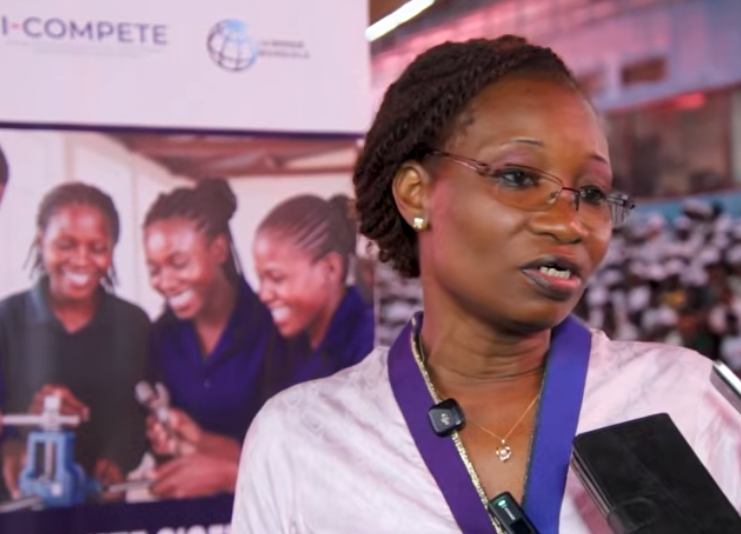
(Bangui, 23 April 2026 | LAMINE MEDIA) Youth unemployment is one of the Central African government’s key concerns. To tackle this, the authorities are focusing on vocational training through the I-COMPETE project, implemented by the Central African Agency for Vocational Training and Employment (ACFPE) and funded by the World Bank. This initiative aims to transform young people into a skilled workforce that is immediately employable in the labour market. After several weeks of preparatory training known as “prépa-pro”, nearly 2,000 young people have benefited from the I-COMPETE programme and are now ready for employment. As Michelle Bimbo, acting director of the ACFPE, points out: “A few months ago, we recruited 2,000 young people as part of the I-COMPETE project for various training courses, particularly in the construction, timber and agriculture sectors. Today, they have just completed the pre-vocational training phase. Very soon, they will begin training in the trades they have chosen. ” These training courses are tailored to local needs, such as construction, carpentry, agriculture and processing… And the objective is clear: to train young people to be operational quickly. Chris Magamba, a beneficiary of the I-COMPETE programme, says: “Today is a day of great joy for me. The ACFPE and the I-COMPETE project have brought us together for the official handover of the kits. We will soon be finishing the pre-vocational phase and starting our vocational training. I am truly grateful to the government for this initiative, because in the Central African Republic, many young people are unemployed.” In a country ravaged by youth unemployment, this programme offers real hope. For beyond technical skills, it also aims to foster discipline, independence and an entrepreneurial spirit. Michelle Bimbo continues: “We expect the young people to commit fully to this training. At the end, several options will be open to them: self-employment, salaried employment or even entrepreneurship. Those who wish to do so will also be able to continue their training at a higher level. ” , Acting Director of the ACFPE – Central African Republic The challenge now is to turn these training programmes into genuine opportunities for sustainable employment. Training, qualifying, integrating: a crucial challenge for the future of Central African youth.
For: LAMINE MEDIA (in FR and GB)
Photo: Michelle Bimbo (photo by Albert FALL/LNC)
Date: 23 April 2026
Copyright ©: 2013 - 2026 All rights reserved: LAMINE MEDIA
SIGN UP FOR OUR NEWSLETTER
contact@laminemedia.com
+33 06 13 98 02 86
© 2025. LAMINE MÉDIA All rights reserved.